

Are you genuinely excited about your story?
For a moment, put your readers aside. Don’t think about what’s on the top of bestseller charts. Forget about the publishing industry entirely.
With all of that stripped away, does your story still call to you? Do you feel excited about it independent of everything else?
Write the book you want to read.
When you write for yourself first, the process stays fun, playful, and surprising — and that energy will show on the page.
Readers can feel the difference between a book written for the love of the story and a book written in an attempt to engage them.
In today’s interview, Sunday Times bestselling author and former CIA analyst David McCloskey shares why writing for yourself is the only strategy that lasts, the “less is more” mantra from his longtime editor, and the daily longhand ritual that keeps his mind clear enough to write.
OUR SPECIAL GUEST TODAY IS…
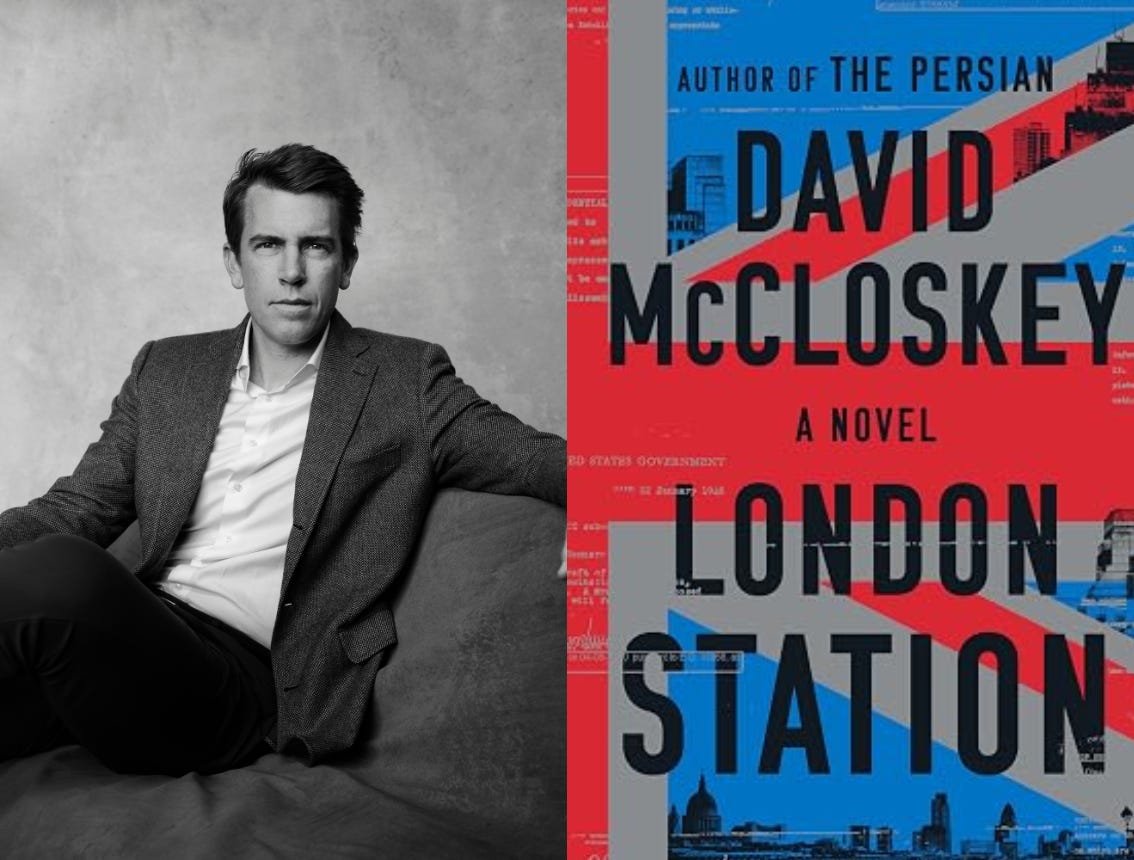
David McCloskey
Sunday Times bestselling author and former CIA analyst
His new novel, London Station, is available for pre-order now and where all books are sold on September 29th.
What do you do to stay true to yourself in your writing?
I write for myself, not for readers, not for an audience, not for a market. I write stories that I want on my bedside table.
I find that reminding myself of this throughout the process helps keep it fun and playful and surprising. And I think (hope?) that is reflected in what becomes the final story.
What is the most memorable writing tip or technique that you have heard, and how did it influence your process?
Less is more. One of the first lessons from Star Lawrence, who became my longtime editor at W.W. Norton.
More words, more complexity, more description, more...stuff in the book. These are not usually good things. Stories are more effective when they are stripped down to the bare bones of what matters.
What part of the writing process brings you the most joy?
The second draft. By then I’ve usually found the basic arc of the story and the main characters. The grueling digging is done, and now I can start to play around and begin making the brushstrokes that the reader eventually sees in the final product.
Are you querying this year?
We wrote this book to make the process easier…

What’s one thing you do (creatively, mentally, or physically) that helps you stay in it when writing gets hard?
I write three pages, longhand in a notebook, at the start of the day. This can be a list of things I need to do, or my reflections on the story, or on an argument I’ve had with my kid.
It doesn’t have to be linked to the novel I’m working on, and quite often it is totally separate. I find this helps me declutter my mind, and then I can use that free space to dip back into the story.
Ready for feedback that takes your story to the next level?
“I have greatly benefitted from my collaboration with Alyssa; I would not be where I am today without her! Her developmental ideas and vision for my novel taught me so much and helped to elevate my work in highly effective ways. Her editorial fingerprint is evident in the final result—a novel on bookshelves nationwide.”
—Jill Beissel, author of Glitter and Gold
When life gets busy, how do you protect your time to write?
I’m fortunate to be able to treat writing as a 9-5 job. When life gets busy for someone who’s got a “normal” job, that doesn’t give them license to stop going to the office. It’s the same for me when I’m writing.
ICYMI…this week on YouTube, I share why I disagree with Freida McFadden’s advice to aspiring authors.

Firmly agree with writing for one’s self. Currently writing my third novel and have been doing it exclusively through the vein of “this is something I’ve wanted to read that I can’t find anywhere”