

Traditional publishing isn’t a meritocracy.
Every writer wants to believe that if their book is good enough, it will sell. I wish that were the case. But traditional publishing isn’t a meritocracy; it’s a business.
Every day, strong manuscripts and talented writers get rejected. When your book gets passed on, it doesn’t mean it’s not good. It means an agent or publisher didn’t see a clear path to sell it right now, in this market, to this moment’s readers.
If you can’t beat the market, try to understand it.
Once you separate craft from business, rejection stops feeling so personal. And you can begin to better understand how to position your story for success.
In today’s interview, literary agent and author Jennifer Michelle Herrera shares the tough genre pivot behind her career, why market awareness matters more than most writers realize, and the common opening-pages mistake that causes preventable rejections.
OUR SPECIAL GUEST TODAY IS…
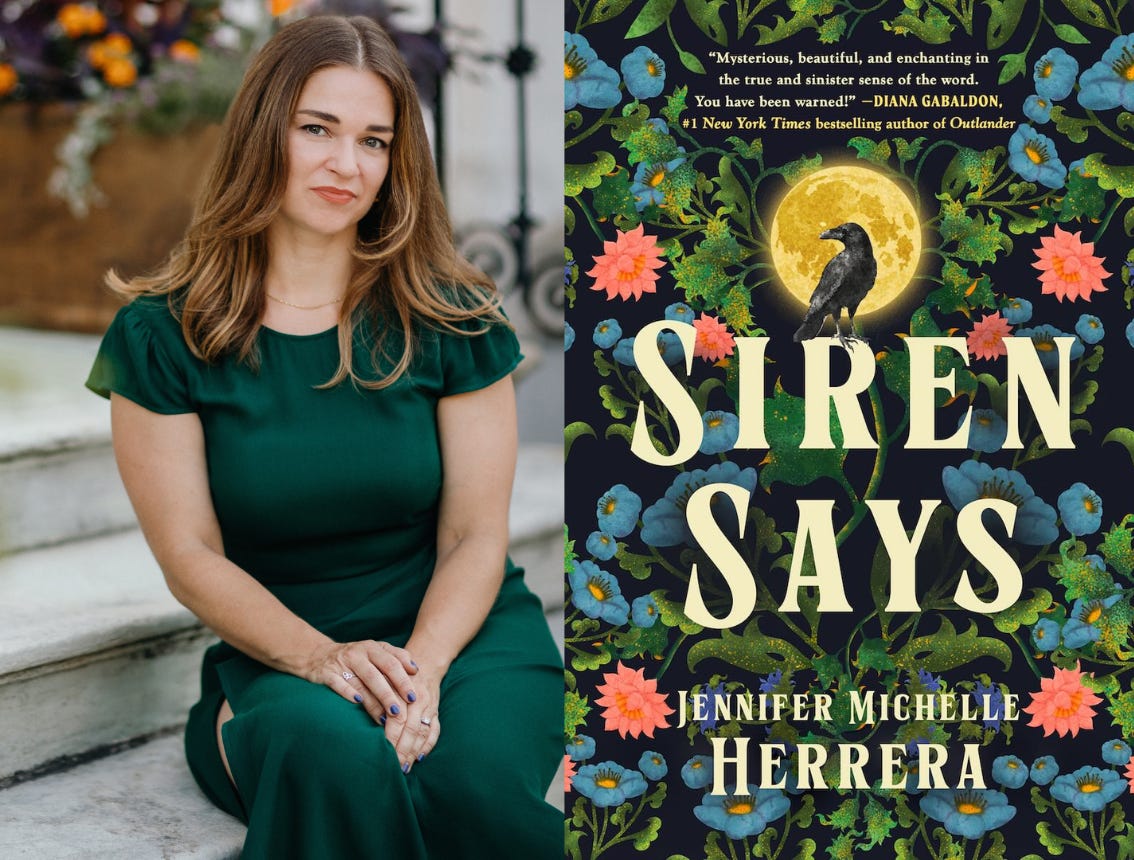
Jennifer Michelle Herrera
Author and Literary Agent
Her new novel SIREN SAYS, available for pre-order now!
Open to queries via QueryTracker from the 1st to the 14th of every month (currently closed to catch up)
What’s one thing about the publishing process no one tells you, but should?
If you want your book to be traditionally published, then the decision of whether a house will buy your book will ultimately be a market decision. In the same way that music goes through shifts in popular tastes, so too do books. You have to be aware of which books are selling right now in order to sell your own book.
Success is not just about how “good” your book is. It’s also about market trends. Knowing this can help take the sting out of rejection.
What’s something you wish more writers knew about rejection?
Just because your book doesn’t get picked up by a lit agent does not mean it is not good. Our jobs are not to determine whether or not a book is “good.” It’s to determine whether we can sell it.
What’s been the toughest moment in your publishing journey, and how did you get through it?
The toughest moment was pivoting genres. I’d written a thriller, which was published in 2023, and I was under contract to write a sequel. However, my book sales didn’t warrant a sequel. So I was basically given a choice: did I want to switch genres and potentially reinvigorate the sales team or “publish out,” meaning that we’d publish the sequel, knowing it probably wouldn’t go anywhere?
Writing a new book in a new genre and shelving the book I’d spent 8 or 9 months on was challenging to say the least! But I find that a sense of humor gets you through just about anything.
What’s a myth about publishing or being an author that you wish more people understood?
People look at Goodreads and see these “terrible” books with great reviews or these “great” books with terrible reviews, and they can’t understand it. What I think they’re not grasping is that books with off-the-charts great reviews are more often than not those that have segmented their audience with some precision.
If a book “package” draws in readers who like that kind of book and is unappealing to those outside of the target demographic, it’s going to have better reviews because no one is coming to that book with “wrong” expectations. Once you get that, I think bad reviews are far less upsetting.
Are you querying this year?
Preorder my book written with the creator of QueryTracker!

What’s the most common issue you see in manuscripts that keeps you from saying yes?
Those early pages are the hardest to get right.
We need great pacing plus emotional investment in the characters plus a clear sense of motivations/stakes. I often say no when those early pages don’t have that magical combination of all the things. Either the opening is all tension between people I haven’t yet learned to care about or it’s all character development and there’s not enough tension to compel me to keep reading.
How can a writer tell when their manuscript is truly ready to query?
Writers should have writer friends who read their work and give them feedback. You aren’t ready to query until your friends are losing their minds because what you wrote is so good. Your friends are the easy crowd because they already love you. If you can’t get them on board, you’re going to be hard pressed when it comes to getting an agent excited.
What traits or qualities do you look for in a potential client?
I love someone with a good attitude who genuinely wants to put in the work to be a great author and is constantly curious about how to do their craft better. Oftentimes writers let their insecurity (or their ego) get in the way.
Ready for feedback that takes your story to the next level?
“I have greatly benefitted from my collaboration with Alyssa; I would not be where I am today without her! Her developmental ideas and vision for my novel taught me so much and helped to elevate my work in highly effective ways. Her editorial fingerprint is evident in the final result—a novel on bookshelves nationwide.”
—Jill Beissel, author of Glitter and Gold
What’s one thing you do (creatively, mentally, or physically) that helps you stay in it when writing gets hard?
I think about myself as a little kid. That little girl in rural Ohio would not have been able to imagine that I’d be where I am now. When the noise gets to be too much, I remind myself what a privilege it is to be doing this. It shifts me out of a “not enough” mindset and into a gratefulness one.
When life gets busy, how do you protect your time to write?
I don’t. At least not right now. I let my brain rest. Many creative people need fallow periods in order to be able to make something beautiful. Our brains need to heal from the Herculean effort of bringing our books into the world. And when my brain wants to rest, I let it rest. And when it doesn’t want to rest because it’s got a story simmering, then the story infiltrates everything I do, whether that means jotting down notes in random moments or just letting myself imagine constantly.
What’s one challenge most debut authors don’t see coming, and how do you help them navigate it?
I don’t think that debuts realize that they are running a small business with this writing thing. (I certainly did not understand this when I was a debut!) That advance money is mostly so you can reinvest in your business. It’s not to spend. I help writers navigate this by having candid conversations about their options for self-promotion (and how to do it in a way that feels good to them). I also draw on my own experiences as an author.
ICYMI…this week on YouTube, I discuss how a debut author’s $2.5 million book deal collapsed and what it means for all writers trying to get published.

Alyssa, thank you for your honesty about the (corporate) traditional publishing model. Doing meritorious work in an industry that is not a meritocracy can be maddening. Your honesty is what caused me to finally pull the trigger on self-publishing. It's been challenging in its own ways, but I'm glad I did it. It's helped me drill down on what "success" means for me.
I was one of your first subscribers from when you were still DM'ing people on reddit to invite them to your YouTube channel. Thanks for your body of work on this topic, it's been helpful to me and, I'm sure, to many others, as publishing continues to change.
DRM
I've come to similar conclusions about the publishing process, based on my experiences with work rejected in one market, and eagerly received in another.