

Your best writing comes from the experiences only you can tell.
“Write what you know” is an imperfect piece of writing advice, but there is a kernel of truth in it: when you pull from the knowledge and experiences unique to you, you create something utterly unique. Something no one else could have written.
So lean into what makes your voice yours.
Maybe your characters have a specific family dynamic that mirrors your own. Or your background and culture shape your story’s setting and environment.
Whatever piece of you shows up in your story, don’t shy away from it — it may be exactly the thing that makes your story stand out from the others on the shelf.
In today’s interview, author Shirlene Obuobi shares the piece of advice that changed how she approached her stories, why the biggest question you can ask yourself might become your next book, and how she carved out time to write alongside a demanding career as a cardiologist.
OUR SPECIAL GUEST TODAY IS…
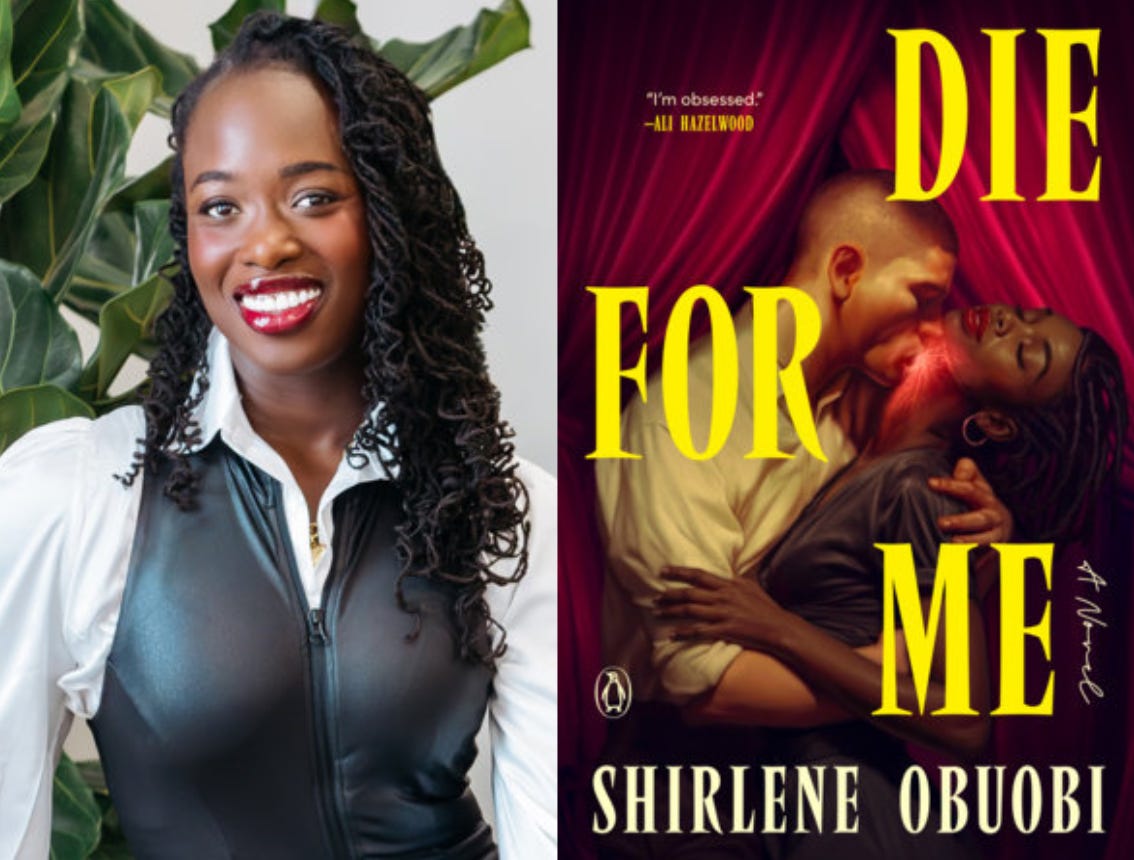
Shirlene Obuobi
USA Today bestselling author
My latest novel, Die for Me, is available now!
What is the most memorable writing tip or technique that you have heard, and how did it influence your process?
I was told by an author I admired at the time that it was imperative, as writers of color, that we tell our own stories. I know this doesn’t sound revolutionary, but as a child who loved to tell stories, I would constantly be accused of self-insertion if I crafted characters that shared my racial, ethnic, or cultural identities.
It was powerful and validating to remember that my best writing would come from leaning into the knowledge and experience that was unique to me.
What do you do to stay true to yourself in your writing?
I write stories that answer big questions that I’m asking myself, whether about myself and my own interiority or the larger world around us.
For example, the big question I asked while writing Die for Me was “can you find true, healthy love with your apex predator,” and I answered it through a sexy, “reverse” age gap genre bending paranormal romance. If I pick a general topic or theme that I’m deeply interested and invested in, I can stay focused and interested in the story I’m crafting.
I wrote a book for querying authors…
Get all of my tips and see stats from 4 million real queries

What’s one thing about the publishing process no one tells you, but should?
Traditional publishing is a group project. The biggest skill isn’t necessarily being able to draft something incredible, it is to hand off your baby to an editorial team and prepare yourself to have to remold her.
Editors give feedback in different ways, and learning to read between the lines and figure out what their suggestions are telling you about what isn’t working in the draft is extremely difficult.
You also have to learn to “kill your darlings,” so to speak, which is to say be willing to cut out your favorite scenes, best prose, and even beloved characters if they are not contributing to the story in a meaningful way.
What part of the writing process brings you the most joy?
I love the second round of edits. When the structure is mostly set in stone, the story is mostly there, and you’re just massaging the prose, making everything punchier, and trimming the fat. Ugh. Sublime.
Ready for feedback that takes your story to the next level?
“I have greatly benefitted from my collaboration with Alyssa; I would not be where I am today without her! Her developmental ideas and vision for my novel taught me so much and helped to elevate my work in highly effective ways. Her editorial fingerprint is evident in the final result—a novel on bookshelves nationwide.”
—Jill Beissel, author of Glitter and Gold
When life gets busy, how do you protect your time to write?
For most of my publishing journey, I’ve been working outrageous hours, first as an internal medicine resident, then as a cardiology fellow, and later as a full-time cardiologist (I’m part-time now, thank god.)
All this to say that life has never not been busy for me. I protect that time because I prioritize it. I tell myself that I’m going to get a certain part of a story done by a certain time, then put aside time to sit in front of my computer and get as close to that part as possible!
Great interview and interesting to get a new spin on "write what you know." I try to utilize my upbringing and the perspective it brings in my writing as much as possible